Friday, January 16, 2026
Deepfakes Year in Review: 2025
2025 marked a pivotal turning point in the era of deepfakes. What began as niche, often clumsy AI manipulations evolved into hyper-realistic, mass-produced synthetic media that crossed the "indistinguishable threshold" for many observers. Advances in tools like OpenAI's Sora 2, Google's Nano Banana + Veo 3, and accessible AI agents democratized creation. Anyone could now generate polished, storyline-driven videos from simple prompts in minutes. The result was an explosive surge in both quality and quantity.
Cybersecurity firm DeepStrike estimated online deepfakes skyrocketed from roughly 500,000 in 2023 to about 8 million in 2025, with annual growth nearing 1,500%. Incidents reported globally surged dramatically: 179 deepfake cases in Q1 2025 alone, exceeding all of 2024 by 19%. Fraud losses tied to deepfakes exceeded $200 million in the first quarter, with projections for AI-facilitated fraud reaching tens of billions by 2027. Over 2,000 verified deepfake attacks were recorded in Q3 2025, with nearly 40% targeting businesses.
Here are the top news stories and trends that defined deepfakes in 2025, featuring some of the most striking real-world use cases:
1. Explosive Growth in Quality and Accessibility
Deepfakes leveled up beyond expectations. AI-generated faces, voices, and full-body performances became stable and coherent, eliminating telltale flickers, warping, or artifacts. Voice cloning required just seconds of audio for natural intonation and emotion. This enabled real-time synthesis and large-scale automation, shifting deepfakes from entertainment gimmicks to everyday threats. Multiple outlets highlighted this as the defining tech story of the year, warning that pixel-level forensics alone would no longer suffice.

2. Massive Surge in Deepfake-Driven Financial Scams
Deepfakes fueled unprecedented fraud, particularly voice cloning and executive impersonation. High-profile cases included:
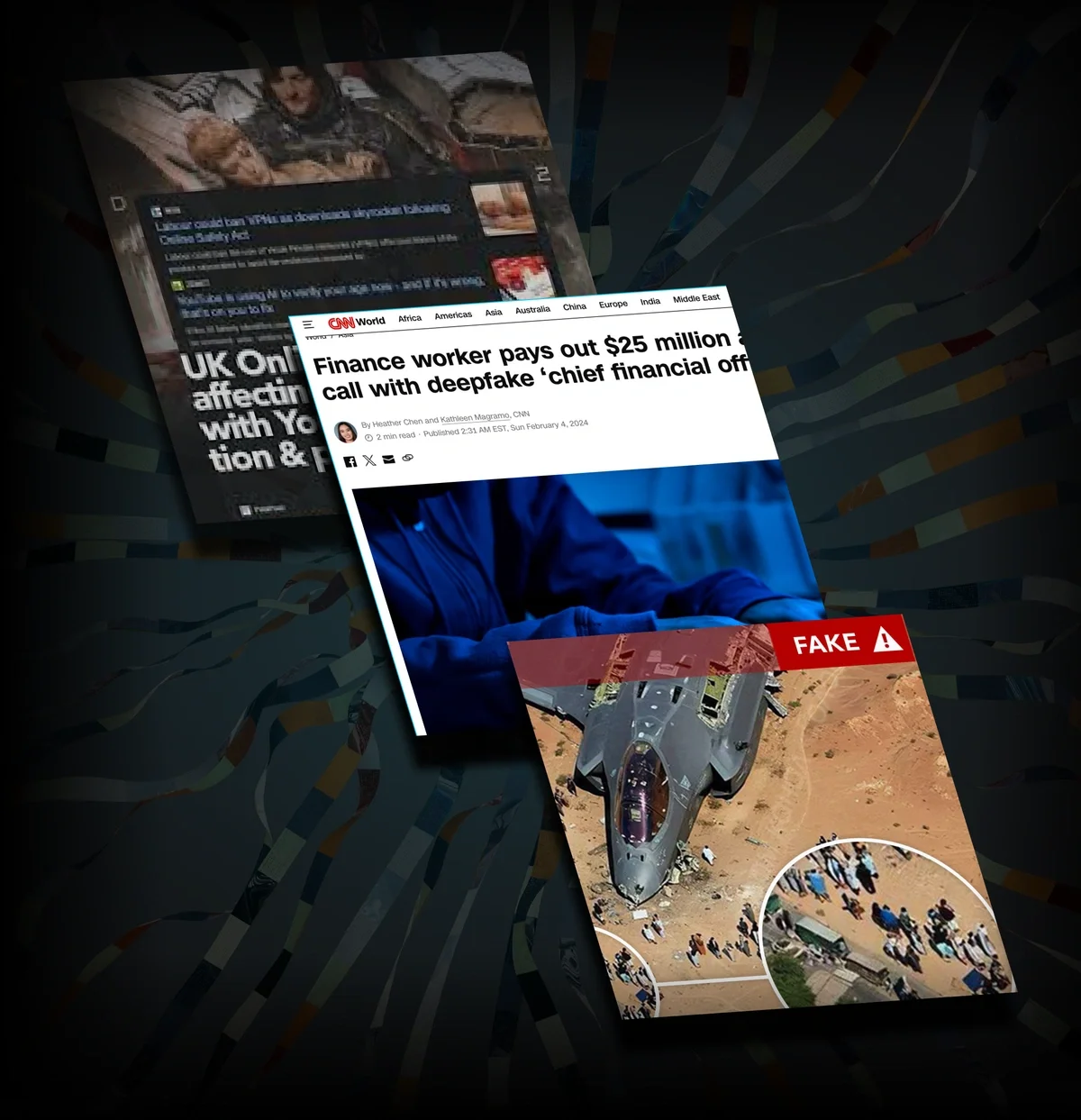
- The $25.5 million Arup scam: In February 2025, a finance worker at global engineering firm Arup was tricked into wiring funds during a deepfake video conference featuring AI-generated likenesses of the CFO and other executives. This sophisticated attack blended AI with traditional business email compromise tactics.
- A $39 million Hong Kong finance scam: Scammers used deepfake video calls impersonating colleagues and executives to authorize massive transfers.
- A Louisiana woman lost over $60,000 to an Elon Musk impersonation deepfake promoting a fake investment scheme.
- The WPP CEO deepfake: Scammers cloned the CEO's voice for a fake Teams call, instructing staff to share credentials and funds. The attempt was stopped just in time, but it highlighted the blend of AI and social engineering.
- A Singapore entrepreneur lost six figures to an AI deepfake of Binance's CZ on Instagram.
- Two Canadians defrauded $2.3 million in separate deepfake incidents.
Voice cloning scams (using social media clips) targeted families and bosses for urgent money requests, while celebrity deepfakes promoted fake crypto and investment schemes. AI-powered scams ranked among the top threats of 2025, with North American losses topping $200 million in Q1 alone.
3. Political Manipulation and Election Interference
Deepfakes infiltrated elections worldwide, often via fake investment scams featuring politicians or misleading announcements:
- Irish Presidential Election Deepfake: In October 2025, a highly realistic AI-generated video circulated on Facebook, mimicking an RTÉ News broadcast. It falsely showed independent candidate Catherine Connolly announcing her withdrawal from the race, complete with deepfake versions of presenter Sharon Ní Bheoláin and political correspondent Paul Cunningham. The video was viewed over millions of times before removal and was condemned as a "disgraceful attempt to mislead voters and undermine democracy." Connolly lodged a complaint with the Electoral Commission, and Meta removed it for violating impersonation policies.
- In Romania's May 2025 presidential election, deepfake videos surfaced, showing candidates promoting bogus investment schemes.
- Similar tactics hit Czech parliamentary elections and Canada's April federal vote (fake Mark Carney crypto promo).
- Fake videos of politicians defecting or withdrawing from races hours before polls.
- While deepfakes did not massively sway major elections (contrary to early fears), they eroded trust and amplified disinformation, especially in cross-border campaigns.
4. Geopolitical Deepfakes: The Israel-Iran Conflict
The June 2025 Israel-Iran war saw the first large-scale use of generative AI in wartime disinformation. Pro-Iranian networks deployed deepfakes to exaggerate military successes:
- AI-generated videos of destruction in Haifa and Tel Aviv, including fake F-35 jets shot down and surrounded by Iranian crowds.
- Fake emergency alerts and images spoofed as from Israel's Home Front Command, warning of fuel shortages or imminent attacks to sow panic.
- Israeli-backed networks used AI for anti-Iran propaganda, including deepfakes of Iranian army defections and manipulated content to stoke unrest.
- A deepfake broadcast of former Israeli Defense Minister Yoav Gallant on Channel 14.
Three viral fake videos amassed over 100 million views, blending with recycled footage to distort narratives on both sides.
5. Non-Consensual and Harmful Content Proliferation, Including Celebrity NIL Cases
Deepfakes targeted individuals for harassment, blackmail, and non-consensual intimate imagery (often affecting women, children, and celebrities). Reports noted a rise in reputational damage, sextortion, and explicit fakes used for extortion. Celebrities and politicians faced the highest targeting (e.g., 47 celebrity incidents in Q1 2025 alone, up 81% from 2024).
Specific Name, Image, and Likeness (NIL) cases included:
- Taylor Swift topped McAfee's 2025 Most Dangerous Celebrity list; her likeness was most exploited in scams, followed by Scarlett Johansson, Jenna Ortega, and Sydney Sweeney.
- George Clooney deepfake scam: An Argentine woman lost over €10,000 to scammers using a deepfake video of Clooney to build a fake relationship and solicit funds for a "human aid mission."
- Johnny Depp impersonation scams: Scammers used AI deepfakes on social media to extort fans.
- Malaysian VIP investment deepfakes: AI videos of politicians like Anwar Ibrahim and celebrities (Elon Musk, Donald Trump) promoted phony schemes.
Legal responses gained momentum: The NO FAKES Act (reintroduced 2025) aims to protect voice and likeness from unauthorized AI recreations. Tennessee's ELVIS Act protects artists' NIL from AI misuse, and California's Astaire Act was amended to target digital replicas.
6. Regulatory Response Accelerates
Governments raced to catch up:
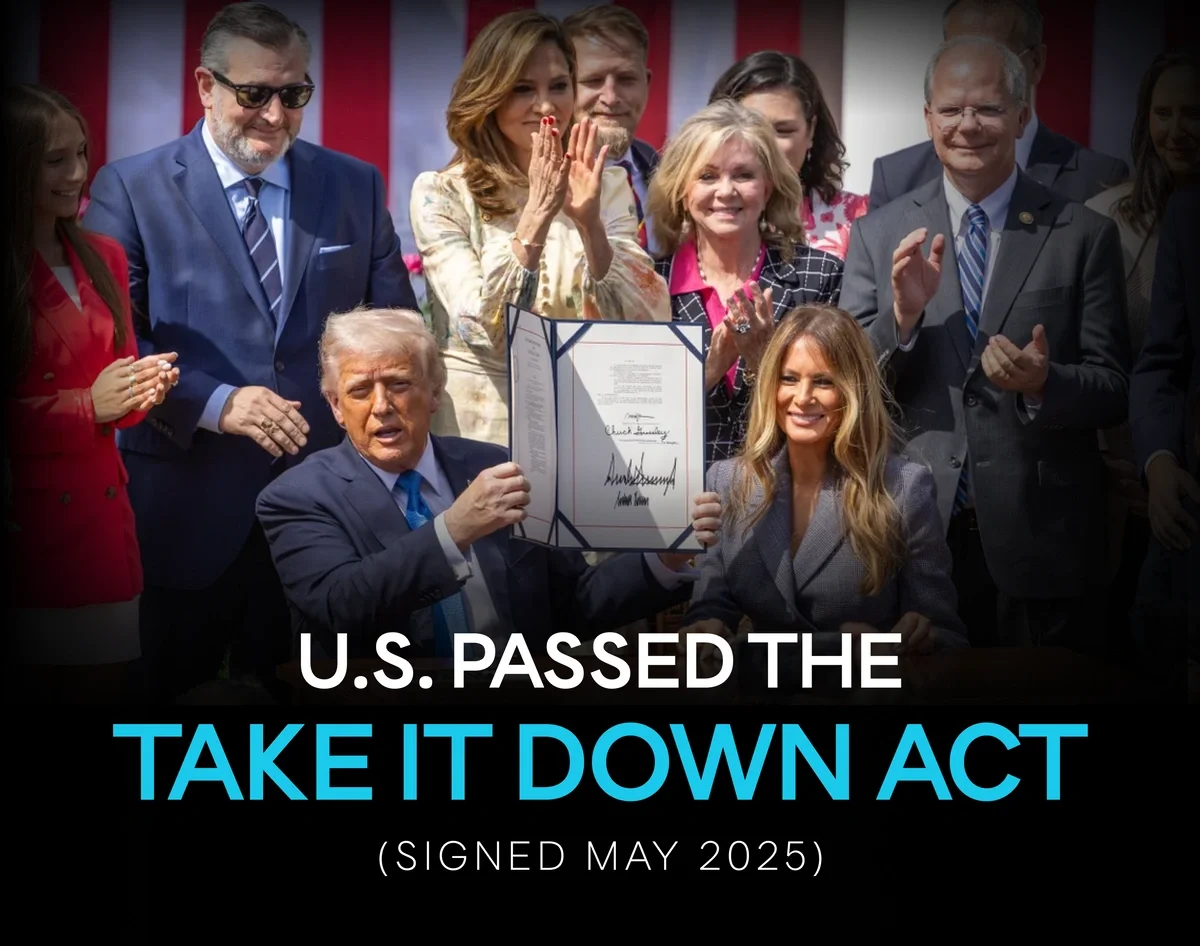
- The U.S. passed the TAKE IT DOWN Act (signed May 2025), criminalizing non-consensual intimate deepfakes and requiring platforms to remove reported content. This was the first major federal law of its kind.
- Dozens of states enacted laws (e.g., Pennsylvania's Act 35 criminalizing fraudulent deepfakes; Washington's HB 1205 targeting forged likenesses for harm).
- Globally: EU AI Act refinements, UK Online Safety Act updates, and pushes in Denmark for broader bans.
Many focused on political ads (disclaimers required), non-consensual imagery, and fraud, though enforcement remained patchy.
7. Advances in Detection and Ongoing Challenges
2025 saw significant progress in deepfake detection, with multimodal forensics and models like LNCLIP-DF achieving high accuracy in controlled settings, though performance often dropped against real-world, evasive threats and the velocity of latest generative AI models. BitMind made huge advances with its decentralized, self-evolving Generative Adversarial System on the Bittensor network, delivering high accuracy and high performance detection for images, videos via browser extensions and apps used by over 150,000 people. Companies like Reality Defender led with ensemble models and enterprise tools like RealScan (94-96% real-time accuracy), while GetReal Security advanced physics-based forensics and identity threat mapping. Despite these innovations, rapid generative AI evolution outpaced detectors, shifting focus toward hybrid defenses combining tech with procedural verification, behavioral biometrics, and standards like C2PA to counter scalable attacks.
Looking Ahead to 2026
In 2026, deepfakes will remain a persistent threat, driving fraud toward $40 billion annually and eroding trust through real-time, autonomous scams. BitMind will continue leading with adaptive systems that evolve daily to outpace new generative models, fostering global collaboration. Efforts like the EU AI Act’s mandates, U.S. DEFIANCE Act, and content provenance standards. The battle will emphasize infrastructure-level safeguards such as cryptographic media signing, inter-industry fraud networks, and media literacy to rebuild verification in an AI-saturated world, with cautious optimism that innovation can stay ahead of malice.